Tuesday, October 14, 2008

Grand Rapids, Ohio Applebutter Festival 2008


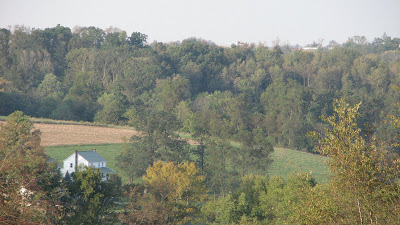
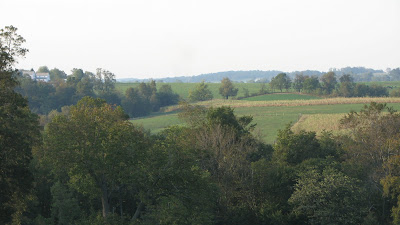
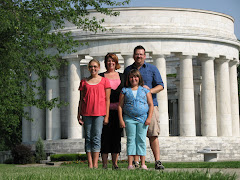
Hey kids, what time is it? Its Grand Rapids Applebutter Festival time! The time of year when boiled cider and shredded apples are cooked down in a multi-day process to make a tasty spread for biscuits, bread, pork, or whatever you like the flavor of applebutter on. It you've been with me for a while, you might remember the photos I posted of the 2007 Applebutter Festival and the 2008 flood in Grand Rapids, Ohio. This year, I was badgered into taking Michelle's point-and-shoot Sony DSC-W80 instead of my Canon S3IS for portability reasons. Since I don't plan on publishing any of these images, the slight reduction in quality doesn't bother me that much.

I'm heading to Albuquerque, NM this week to present my current research at the Annual Meeting of the American Studies Association, and had been toying with taking Michelle's little camera, also for portability reasons, but since I've never set foot inside New Mexico, I'll take the S3IS--it has more features and memory than my first notebook computer--and shoot my heart out. Of course figuratively, not literally.

Would you like to be cool and make your own applebutter? Well here's a recipe (ATTENTION: the first step may be a deal breaker, if so, just buy 4 pints at next year's fest):

Day One:
Procure a 50-gallon copper kettle (if you don't have one, Helen Picking Neff of the D. Picking Co. in Bucyrus, Ohio can fix you up with one. Just be aware that it will be hand made, just as they have been since 1874, and D. Picking is so back-logged with orders, it may take approximately one year for delivery. Remember, cost must NOT be an issue--this is a kettle you are buying for your great-grandchildren).

Stoke a fire and set up the kettle over the flames. Be sure to have an ample supply of fire wood as the next process will take an entire day.

Boil 15 gallons of fresh-pressed cider down to approximately five. Reserve for day three.

Day Two:
Peel and core approximately 38 bushels of apples, cover and reserve for day three.

Day Three:
Fill the the 50-gallon copper kettle with the boiled cider, and and 30-or-so bushels of the peeled and cored apples. Stoke the fire under and continue feeding it throughout the entire process. Bring to a boil, With a long-handled stirring stick, keep the apple butter stirred constantly. Add more apples as the mixture cooks down. Somewhere around hour 6, check the apple butter for consistency, you do this by dipping some out and putting it on a slightly-tilted plate. you are looking for the "run" or the "weep" to go away. Then start to add 75 pounds of white sugar, stir until dissolved and applebutter is back to a full boil.

Ladle cooked mixture into hot, pint-sized jars. Leave 1/4 inch head space place seal on jar, then screw down ring, and place upside down for 30 minutes-or so.

Yield: approximately 350 pints

Also at the festival, tasty local foods: Silly girls, one with a Buckeye nut necklace and the other with a Buckeye nut key chain. It is an old traditions that Ohioans carry a nut from the indigenous buckeye tree in their pocket for good luck:
Big crowds, and long lines for bean soup and bison burgers:and tasty, open-pit chicken from our friends at the Tontogany, Ohio VFW:
And many other activities, such as corn shelling using antique equipment and bike rides:NC

MacQueen Apple Butter Stir

The morning after the Nigerian Independence celebration we went to MacQueen Orchards for their annual Apple Butter Stir. MacQueen's produce a flash-pasteurized fresh cider that they then put into a slushy machine and it rolls and rolls around until it churns into a little bit of heaven...an icy heaven. This is a destination drink. It keeps me coming back year-after-year, well a little full disclosure is needed here, the delicious baked goods and doughnuts hold their own too. Notice the progression from fresh, raw apples for sale:
The apples then go to the cider mill. The secret to a tasty cider is a balance of equal parts sweet, tart and a juicy apples:
This machine turns apple cider into tasty li'l angels from heaven,which then we drink--ummmmm--delicious:
Also delicious:
Dave and Mirium Cooper of Cooper's Cider Mill come all the way from Bucyrus, Ohio to stir a 45-gallon copper kettle of applebutter over an open fire. Dave is the gentleman in the white shirt and straw hat who is helping Dara stir the kettle of the delicious spread:

Nigerian Independence Celebration

Some friends invited us to the Nigerian Independence Celebration in Toledo; we gladly accepted. Obed is an engineer and originally from Nigeria and Emily, Ph.D. is from Akron, Ohio, and they were unable to attend the annual festival, so they offered their tickets, and their children to us. We took both--the children were on a one-night basis. Who would pass up an opportunity like this: The men and women in traditional Nigerian dress:
You gotta love the food:
Dara, Emily , Jessica:
NC

Saturday, October 4, 2008

Dilly Beans

A few weeks back, I bought some lovely green and wax beans at the local farmers market here in BG, with the express intent of turning them into tasty pickled Dilly Beans. Almost every person I or Michelle said anything to about the Dilly Beans expressed curiosity, but confessed unfamiliarity, with the product.

Which surprised me because NW Ohio has a strong agricultural tradition where many farms are dedicated to the cultivation of commercial crops such as corn, soybeans, and tomatoes, that make their way to commercial processors such as Con-Agra, Heinz, Hunts, La Choy, Pepperidge Farms, etc. Additionally, there are numerous truck farms where farmers grow crops to sell at road-side markets, and/ or markets in the urban centers. Moreover many rural families tend a garden plot to suit their individual tastes and needs. Given the strong agricultural heritage in NW Ohio, it would seem natural for such a product to exist, yet it seems that Dilly Beans are not a common food in Northwest Ohio.

This situation can be explained by thinking about how raw foodstuffs, on their own, tend to be associated with the land they come from, and by extension, how many conoscenti (those in the know) claim that specific crops can be/ are enhanced by the geography, soil composition, and climactic conditions of the land where the produce is grown. For example: Vidalia onions are grown in Vidalia, GA, or Muskmelons in Milan, Ohio, or Garlic in Gilroy, CA, or Honeycrisp apples, and Montmorency cherries in Michigan. Except for notions of quality and constructions of superior taste to similar products grown elsewhere, raw produce is not imbued with specific meanings that say anything about the people who grow or consume the fruits or vegetables. It is what one does with food and how that food is prepared that communicates ethnicity, region, skill level, artistry, socio-economics, religion, or ethos. And here, Dilly Beans says something about me and where I come from.

Dilly Beans are a commonly-consumed food in the Intermountain West, where many families have their vegetable gardens and around August, those Blue Lake Bush Beans start to mature, and mature, and mature. They mature in waves that require regular harvesting, and as long as the weather holds, they continue to mature until the first frost--or frustration--hits. The socio-economic realities of the hard-scrabble existence of those first waves of Anglo settlers who carved out an existence in the Great Basin telescopes into the contemporary culture where many Westerners consider it their duty to work toward their own subsistence, or at least reconcile with the past--each summer--by tending a ten-foot by ten-foot plot of tomatoes, cucumbers, radishes, peas, zucchini, perhaps an eggplant, and beans. Given the commonly-held value of economic thrift in the Intermountain West, those ever-growing mounds of beans coming in from the garden must be preserved, and reserved for, or held against impending periods of privation that may come--or at least the perception that eventually one may be down on one's luck and have a hankering for a Dilly Bean. Moreover, notions of thrift and preparation are circulated through religious networks that council to have a ready supply of food in one's pantry to ward against starvation during extreme situations.

Before relocating to a small university town in America's heartland, I had extensive perennial and annual flower gardens and tended a forty-by-eighty- foot vegetable garden where I grew old standards of corn, beans, tomatoes, carrots, parsnips, and squash but also experimented with broccoli, cauliflower (I grew it for Michelle even though I find it unpalatable), brussels sprouts (another yuck), sweet potatoes, honeydew melons, muskmelons, watermelons, multiple varieties of peppers, onions, potatoes, etc. And all had to be harvested and preserved. Now Michelle came from a tradition where home canning was practiced but not passed on to her, so I stepped in and played with the traditional construction of the division of labor and canned it myself with her helping me. Here, the traditional division of labor is trumped by personal experience, interest, and need. And with so much produce coming off the garden we needed to preserve it or throw it away; and throwing it away was not an option.

Fast forward to living in Ohio, I brought my garden tiller here with me, but due to the soil conditions--I live in a modern subdivision built where a farm had operated for 175 years, in a reclaimed/ drained swamp. I have hard-pan clay that is so difficult to chew through that the environmental and geographic conditions trump my heritage and interests. Therefore, I have greatly reduced my a gardening to perennials, shrubs, and trees. I have some herbs in amongst the perennials and the shrubs, that the rabbits enjoy, and two pots for peppers and tomatoes, so, instead of growing the beans myself, I bought fresh beans, garlic, and dill weed at the farmers market and had everything else--except for the Pickling Salt--in the pantry. Here is the recipe:

DILLY BEANS

4 lbs. green and wax beans, trimmed to fit into a pint jar
2 tsp. cayenne pepper flakes
16 cloves garlic
8 heads fresh dill weed
1/2 cup canning (pickling) salt
5 cups water
5 cups white vinegar

Pack beans, lengthwise, into hot jars, leaving 1/4 inch head space. For each pint, add approximately 1/4 tsp. cayenne (more if you like 'em hot), 2 cloves garlic, and 1 head dill weed.

Combine remaining ingredients and bring to boiling. Pour hot brine over beans, leaving 1/4 inch head space. Adjust caps. process pints for 10 minutes in boiling water bath.

Yields 8 pints of Dilly Beans
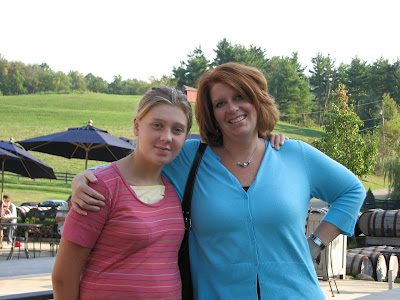
We let them sit and pickle for four weeks and then popped the seal on the Ball Mason--and oh so delicious--they are crunchy, tangy, have a nice balance of herb to garlic, with a pleasant heat from the cayenne flakes on the finish.
NC

You gotta love someone who loves eating in Dearborn...and sings about it

Since it’s the beginning of a new month, and this is my first post of the new month, it seems only fitting that I cast some attention toward the wonderful diversity within an hour’s drive of my door-to-the-world.

In roughly the same time it takes to teach a class session of Cultural Anthropology, I can be in Dearborn, Michigan eating some of the best food in the nation and experiencing culture. Dearborn is home to the Ford Motor Co. The Henry Ford, and Greenfield Village. It is also considered to be the Arab American capitol and Warren Avenue is the heart of the community. I was first introduced to the New Yasmeen Bakery and Shatila—both within a block of each other on Warren Ave.--by my good friend, Matt Stiffler, who is in the Arab American Studies program at the University of Michigan (Ann Arbor). Since then, I have become a New Yasmeen and Shatila junkie.

Now, if you consider yourself a foodie and want to start out with the savory and progress to the sweet, I suggest stopping at New Yasmeen for any of their daily specials over majadara with cracked wheat, a fried kibbee, a meat, cheese or spinach fatayer, some stuffed grape leaves, hommus, and pita—be sure to buy extra pita, and extra everything, to go.

My unelaborated assessment of Shatila is that ranks among the best pastry shops in the nation. Inside their palace of pastries, one will find an assortment of fine French and Lebanese pastries displayed like fine jewels. Here, food tickles both the palate and the eye, without asking much in return. I suggest buying a French pastry to eat there, and if you’re only one, a dozen to go.

If you can’t make it to Dearborn, I suggest watching the following video and dream of the day you too can eat hommus with Thomas Jefferson:

Next time I'm in Dearborn, I'll take photos and post them here.

NC

Tuesday, September 23, 2008

Time traveling in Ohio

One need not procure a machine off the internet to travel through time, one needs only to drive two hours in any direction from Bowling Green, Ohio. In a relatively short space of time, one may engage with the 300-or-so years of recorded history in the area and many millenia of unrecorded history where artifacts and earthworks whisper of the past.
To celebrate Michelle's **th birthday (20 Sept) and Jessica's 13th (21 Sept), we took a road trip through Holmes County, Ohio's Amish country. The day was full of meat and cheese tasting--and buying, of course--at Guggisberg and Heini's, pastoral scenes of 10-cow farms, friendly merchants selling the fruits of their labor, horse-drawn enclosed black carriages, folks speaking German, and family-friendly good times. Amish carriages at the Holmes County Home:
Carriages share the roads with automobiles, in some places there are secondary (depending on your perspective they may be considered primary) networks of roads exclusively for carriages.

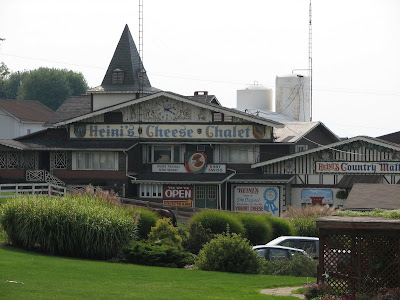
Rolling hills dotted with family farms are the way of life in Holmes County: Amish farmers typically milk fewer than 10 cows each morning and transport the sweet milk to dairies and cheese factories in steel milk cans in the back of horse-drawn carriages. These two photos were taken outside Heini's Cheese Chalet in Bunker Hill, Ohio:
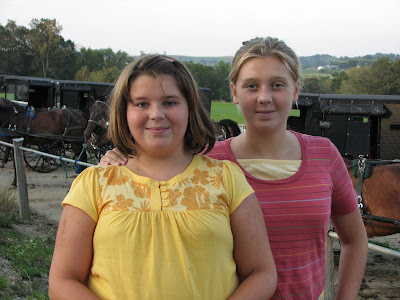
After a full day of sightseeing and cheese tasting, the best way to finish was with a nice dinner of chicken, roast beef, sauerkraut and sausages, potatoes, noodles, and dressing at the Farmstead Amish restaurant in Berlin. This is a picture of Emily and Jessica posing with the horses outside at the restaurant hitching rail:Looking into the restaurant as it was closing for the night (around 8:00 PM).

NC

Justice and Community Identity

The county courthouses of some of Ohio's 88 counties are among the most beautiful examples of public art and architecture in the Midwest. Most date from the mid-to-late nineteenth century and reflect the popular tastes and styles from which they emerge. Over my time in Ohio, I have become aware of the tenuous place these grand buildings hold in their respective communities and what it can mean for a community, both economically and symbolically, to maintain these buildings. Eighteen have been replaced by featureless pieces of modern or post-modern architecture (such as the Franklin Co. Courthouse in Columbus)
and others are endangered, as in the case of the Seneca County Courthouse in Tiffin. This is what the building looked like a century ago:
And what it looks like today. The County has received demolition bids to convert this Beau Arts beauty-in-distress into ROAD BASE. Of course, there has been an intense debate over preservation and the county commissioners seem to be coming around to the side of the preservationists. This is what the building looked like in January when Michelle and I toured it and donated to the preservationists cause. I hope to see it looking grand again.
I have made it a point to photograph the courthouses as I encounter them. This past weekend I was able to see two more: the Wayne County Courthouse in Wooster
and the Holmes County Courthouse in Millersburg, Ohio.


NC

Weekend in bloom

I have a thing for flowers and this past weekend I took the time to stop and photograph some. This is a berry of some sort growing on a tree outside the Holmes County, Ohio courthouse. I don't know what it is but was taken in by the beauty and took a photograph to help me identify it later: A common blue salvia (an annual) growing in mass in a flower bed outside Heini's Cheese Chalet in Bunker Hill, Ohio:
Emily say this rose intertwined in the railing outside Heini's and wanted a picture of it:
Since classes started at BGSU back on the 25th of August, my time has not been my own. I have been putting in extremely long days preparing for my Cultural Anthropology and Minority Groups class and trying to write a dissertation. Of course, as I'm sure you can tell by the way I organized that last sentence, the course work is dominating the majority of my time and the diss is being pushed to the back burner to simmer--not boil. This week I will change things up a bit. The diss is being shifted to the big main burner and the flame is on high.

Wednesday, September 3, 2008

Local kid, Jonathan Burkin, makes AWESOME on America's Got Talent


I've seen Jonathan Burkin at a number of local festivals and parades in NW Ohio and my reaction is that he CONSISTENTLY ramps up the quality of any parade he is in. Although he was not at the Milan Melon Festival this year, his group was, and they were there for him.
Over the years I have been conducting field research at food festivals in NW Ohio, I have tried to get photographs of him in action, but this dude has some quick moves and I usually end up with shots of his back. Here are some action shots at the 2007 Walleye Festival in Port Clinton, Ohio where he EARNED and won a BIG trophy.

If you are reading this, please throw your support behind him and any other kids who resist mindless conformity and dare to dream big.